Mai and odori
| Mai | Odori | |
|---|---|---|
| Movement | Calm, restrained movement based on turning | Rhythmic movement with jumps and stamping |
| Roots | Kagura, Noh, kamigata-mai | Nenbutsu odori, furyū odori, kabuki dance |
| Feeling | Dignity and grace | Lively and colourful |
Most works of Nihon Buyo contain both. In Musume Dōjōji, for example, dignified passages of mai drawn from the Noh play Dōjōji alternate with lively dancing of a town girl in love.
Furi
Furi are movements that show the meaning of the words of the song. At the word "moon" the dancer looks up at the sky; at "letter" she opens her fan and seems to read it. Words and movements are bound together, so once you know the words, the meaning of the movements appears.
Su-odori and full costume
- Full costume (ishō-tsuki): the dancer wears the wig, make-up and costume of the role: a long-sleeved kimono for a girl, a long mane for a lion spirit. The stage is colourful and the story easy to follow.
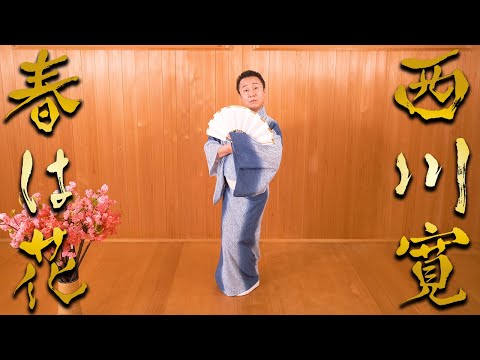
- Su-odori: danced without wig or costume, in a crested kimono and hakama (or a plain kimono). With no help from the costume, the dancer's use of the body and power of expression are laid bare. A man may dance a girl, or a woman a samurai, and the audience's imagination fills the stage.
- Hansu: halfway between the two. No wig is worn, and only a kimono or props that suggest the role are used.